Why You Don’t Have to Manage Anxiety Alone: How a Therapist Can Help
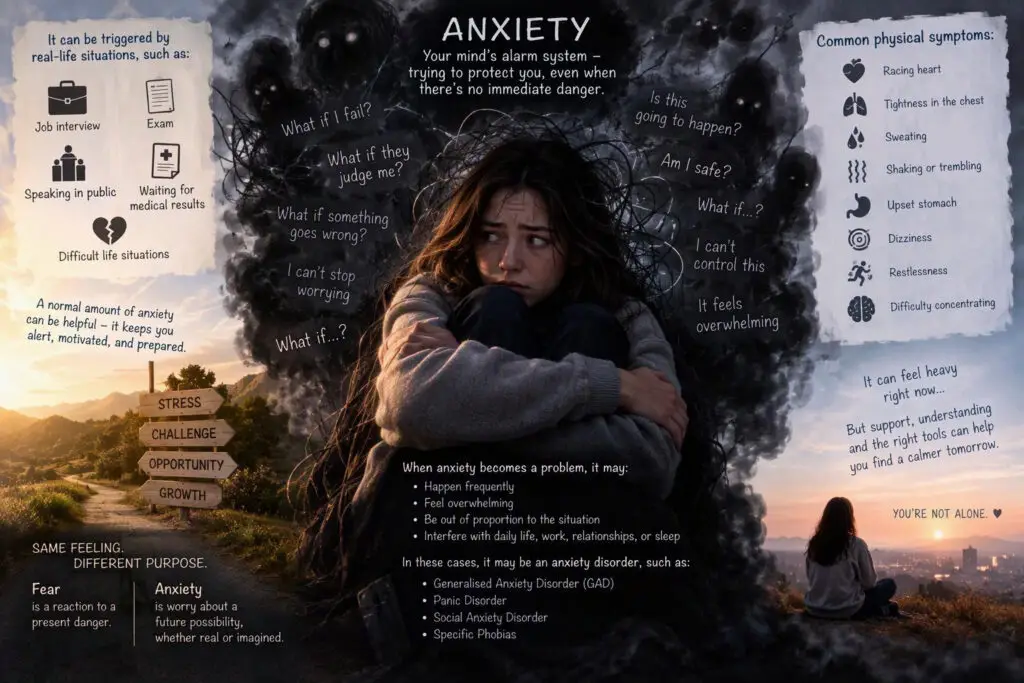
Anxiety is something we all experience from time to time. Stress at work, relationship difficulties, financial pressure, health concerns or uncertainty about the future can all trigger anxious feelings. However, when anxiety becomes persistent, overwhelming or starts affecting your everyday life, speaking with a therapist can provide valuable support.
Why Seeing a Therapist Is More Important Than Ever in the Age of AI

Artificial intelligence (AI) is rapidly changing the way we access information, including mental health advice. With AI chatbots available 24 hours a day, many people are turning to them for support with anxiety, depression, relationship difficulties and everyday stress. While AI can be a useful tool, it cannot replace the value of working with a qualified, experienced therapist.
When Your Teenager Struggles, It Doesn’t Mean You’ve Failed

There’s a particular kind of exhaustion that comes with raising a teenager. If you’ve found yourself thinking, “I must be failing as a parent,” you are far from alone — and you’re almost certainly wrong. Discover why teenage struggle isn’t a verdict on your parenting, and what actually helps when your relationship with your teen feels strained.
Why motivation is not the problem, a life coaching perspective on systems, habits, and emotional blocks

We are consistently told that when we fail to establish a new habit, progress in our career, or complete our daily tasks, it is because we lack willpower, drive, or motivation. We wait, often indefinitely, for a sudden spark of inspiration to strike before we take action. We buy books, watch videos, and listen to speakers, searching for that elusive feeling of being ready.
The art of the pause, how slowing down saves relationships, a couples therapy technique explained in simple language

During a high-conflict relationship argument, your greatest, most destructive enemy is speed. When unhelpful cycles trigger, and defensive shields lock, we stop communicating to connect, instead, we communicate purely to defend. The gap between hearing your partner’s words and launching a counter-attack shrinks to milliseconds.
What happens in a first therapy session, a warm, demystifying walkthrough for anxious new clients

Taking the step to speak with a professional counsellor is an act of immense personal courage. Yet, for many, the days leading up to that initial appointment are often accompanied by a quiet, persistent anxiety. We wonder: What will they ask? Do I have to share my deepest secrets immediately? What if I freeze or begin to cry?