Why You Don't Have to Manage Anxiety Alone: How a Therapist Can Help
 Click to enlarge
Anxiety is something we all experience from time to time. Stress at work, relationship difficulties, financial pressure, health concerns or uncertainty about the future can all trigger anxious feelings. However, when anxiety becomes persistent, overwhelming or starts affecting your everyday life, speaking with a therapist can provide valuable support.
Many people try to manage anxiety on their own. They may tell themselves to "just relax," avoid situations that make them uncomfortable, distract themselves by staying busy or simply hope the anxiety will eventually go away. While these strategies can provide temporary relief, they don't always address what is causing the anxiety.
Understanding what's behind your anxiety
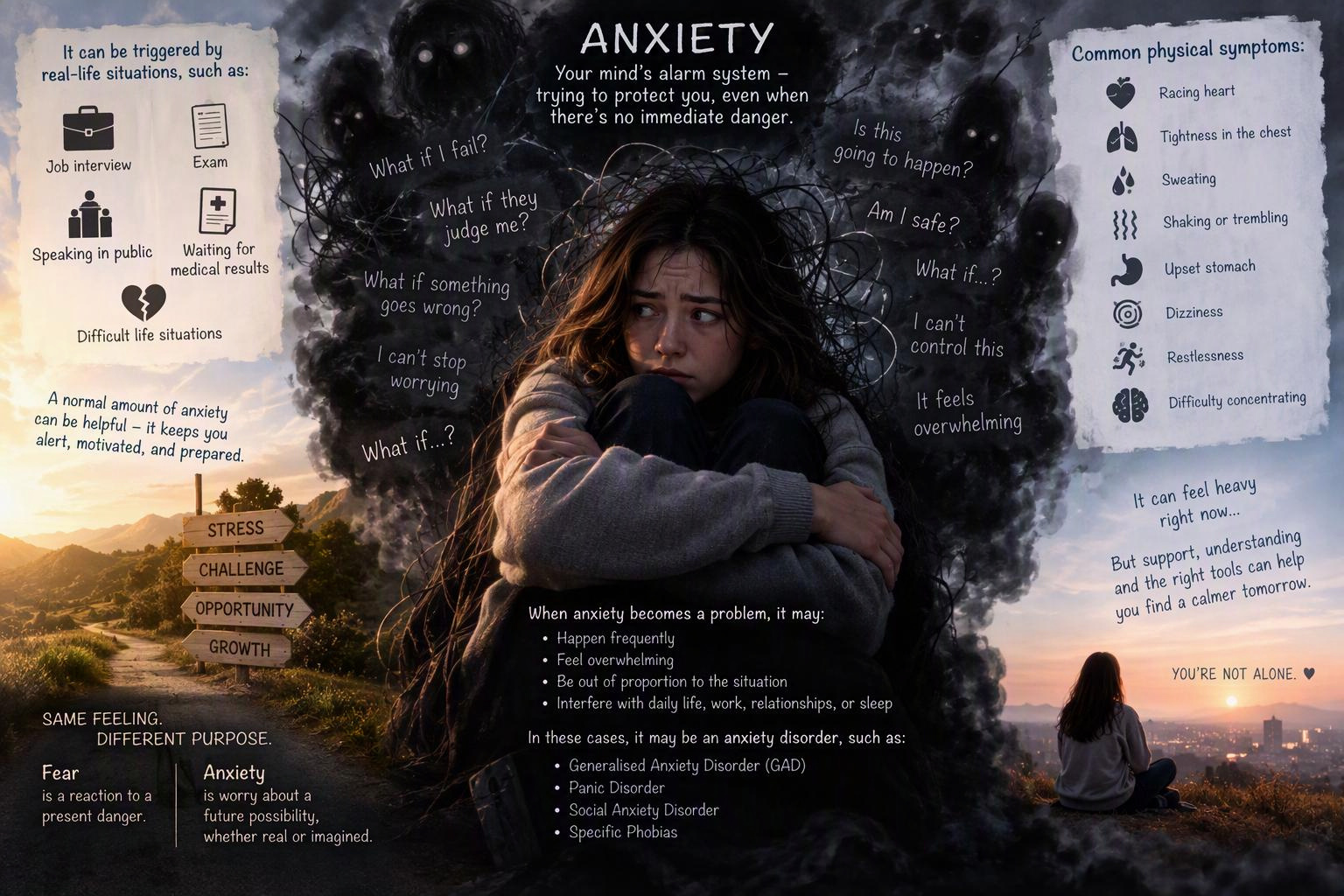
Anxiety isn't simply about worrying too much. It can affect your thoughts, emotions, physical sensations and behaviour.
You may experience racing thoughts, constant worrying, difficulty sleeping, irritability, a racing heart, feeling restless, difficulty concentrating or a strong desire to avoid certain situations.
A therapist can help you explore why you're experiencing anxiety and identify patterns that may be keeping it going. Anxiety can sometimes be related to current circumstances, but it may also be connected to past experiences, trauma, relationships, low self-esteem or long-standing patterns of thinking.
"The goal is not to eliminate anxiety. It is to stop anxiety deciding how you live."
Having somewhere safe to talk
One of the benefits of therapy is having a confidential and non-judgemental space where you can talk openly about what you're experiencing.
You might not want to burden friends or family with your worries, or you may feel that they don't fully understand what you're going through. A therapist provides an opportunity to talk honestly while having someone who can help you understand your experiences and develop practical strategies.
Sometimes being able to say, "This is what I've been worrying about" is an important first step.
Learning to manage anxious thoughts
Anxiety can make us believe that something bad is about to happen. You might constantly ask yourself:
- What if something goes wrong?
- What if I can't cope?
- What if people judge me?
Therapy can help you recognise these patterns and learn to respond to anxious thoughts differently. Rather than trying to eliminate every worrying thought, you can learn how to challenge unhelpful thinking and develop greater confidence in your ability to cope.
Breaking the cycle of avoidance
Avoiding something that makes you anxious can feel helpful in the short term. Unfortunately, avoidance can sometimes reinforce anxiety because your brain learns that the situation must be dangerous.
A therapist can help you understand avoidance patterns and, when appropriate, gradually build your confidence in facing situations that cause anxiety.
Developing practical tools
Therapy isn't simply about talking. Depending on your individual needs, counselling may incorporate evidence-informed approaches such as Cognitive Behavioural Therapy (CBT), Dialectical Behaviour Therapy (DBT), mindfulness and other therapeutic strategies.
You can learn practical skills for managing stress, regulating emotions, calming your nervous system, challenging unhelpful thoughts and improving your confidence.
You don't have to wait until anxiety takes over
You don't need to be in crisis before seeking professional support.
If anxiety is affecting your sleep, relationships, work, confidence or enjoyment of life, speaking with a qualified therapist may help you understand what's happening and find a way forward.
You don't have to eliminate anxiety completely. The goal is to develop the skills and confidence to prevent anxiety from controlling your life.
Sometimes, having the right person beside you can make it easier to move from surviving to truly living.
You don't have to manage anxiety alone
You don't need to be in crisis to reach out. If you're ready to explore a safe, non-judgemental space to understand what's driving your anxiety and build practical tools for managing it, let's find your footing together, entirely at your own pace.